Elastic therapeutic taping in Towson, MD — supports muscles and joints, reduces swelling, and keeps you moving freely without limiting your range of motion.
Kinesio taping uses thin, elastic therapeutic tape applied along muscles and joints to gently support them, reduce swelling, and encourage healthy movement — without limiting your range of motion. Whether you're recovering from a sprain, managing an overuse injury, or staying active through a shoulder or knee problem, Dr. Paul Abosh at our Towson clinic uses kinesio taping as part of a broader care plan that keeps Greater Baltimore patients moving, competing, and healing on their own schedule.
How it works
What to expect with kinesio taping
Assessment and taping strategy
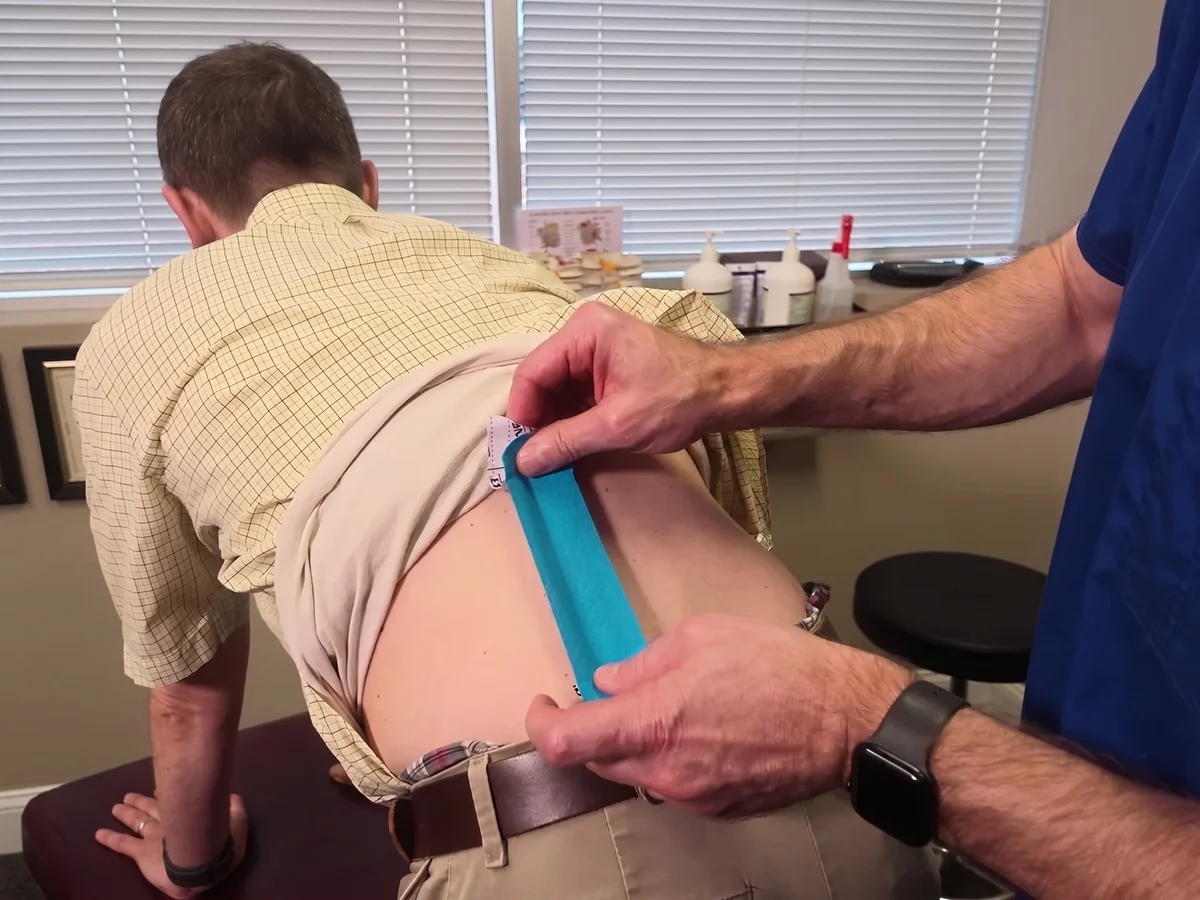
We identify which muscles and joints need support, then map out a taping pattern matched to your specific injury, movement limitation, or performance goal.
Precise application
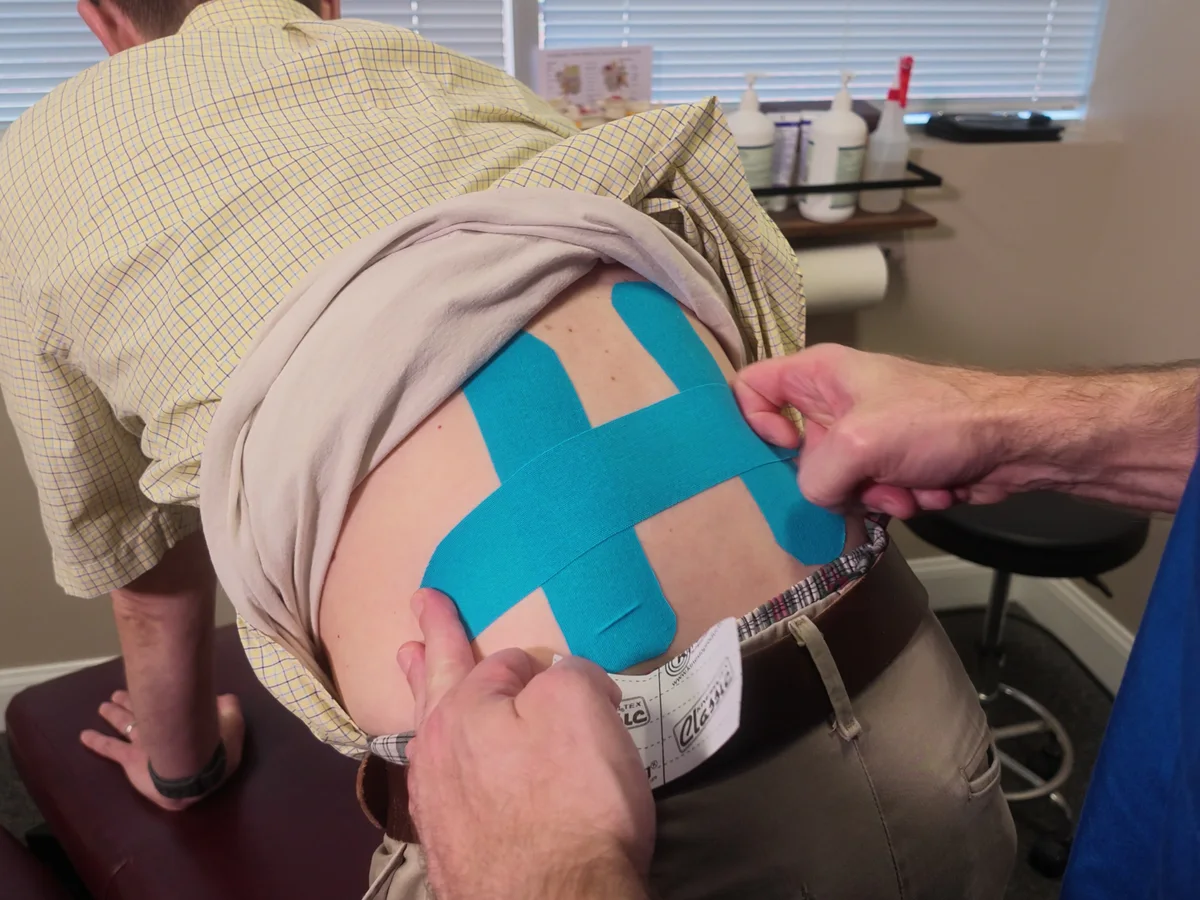
Tape is applied with the correct tension and direction for your tissue — each strip targets a specific goal, whether that's lifting swelling, supporting a joint, or activating an underactive muscle.
Movement and follow-through
You leave with the tape on and a clear picture of what to expect — how long to wear it, how to remove it, and how it fits into the rest of your care plan.
Why patients choose it
Benefits of kinesio taping
Supports muscles and joints without blocking range of motion
Reduces swelling and bruising by improving lymphatic circulation
Relieves pain through gentle feedback to the nervous system
Helps activate weak or inhibited muscles after injury
Wears through workouts, showers, and daily activity for 3–5 days
Integrates naturally with chiropractic and soft-tissue care
The basics
About kinesio taping
Kinesio tape looks a lot like regular athletic tape, but it works very differently. Unlike rigid sports tape that braces a joint by restricting motion, kinesio tape is stretchy — close to the same elasticity as human skin. When applied in precise patterns, it gently lifts the skin, creates space in the underlying tissue, and sends feedback signals through the nervous system that reduce pain, improve circulation, and help the brain recruit muscles more efficiently.
Because it moves with your body, kinesio tape can stay on through workouts, showers, and a full day of work — typically 3 to 5 days per application. It pairs naturally with chiropractic adjustments, soft-tissue therapy, and corrective rehabilitation: the tape extends the benefit of your visit between sessions, so progress accumulates faster. It's used widely in professional and amateur sports, but it's equally effective for everyday patients dealing with joint pain, swelling after an injury, or muscle weakness from a chronic condition.
New Patients Welcome
New patients welcome — book your first visit today
Your first visit is all about you — a one-on-one consultation, a thorough exam, and a clear, plain-language explanation of how we can help, plus a care plan built around your goals.
Our office is here to help you move and heal without limiting your range of motion. Kinesio taping is a soft-tissue technique that uses thin, stretchy therapeutic tape — applied directly to the skin along muscles and joints — to support healing, reduce swelling, and improve how your body moves.
On your first visit, Dr. Abosh examines the area and identifies which muscles, tendons, or joints need support and what pattern of tape will best address your goals. This assures he has a thorough understanding of what your tissue needs before applying anything.
We’ll work with you to fit taping into your broader treatment plan alongside chiropractic adjustments and soft-tissue work. We provide kinesio taping in Towson, MD in a welcoming, family-friendly environment. We specialize in helping you:
Support muscles and joints without blocking range of motion
Reduce swelling and bruising by improving circulation
Relieve pain through gentle feedback to the nervous system
Activate weak or inhibited muscles after injury
Stay active through workouts, showers, and daily activity for 3–5 days
We want to find exactly what your muscles and joints need and support them the right way. If you’re recovering from a sprain or managing an overuse injury, get in touch with us to book your appointment today.
What Does Kinesio Taping Do?
Kinesio tape looks a lot like regular athletic tape, but it works very differently. Unlike rigid sports tape that braces a joint by restricting motion, kinesio tape is stretchy — close to the same elasticity as human skin. When applied in precise patterns, it gently lifts the skin, creates space in the underlying tissue, and sends feedback signals through the nervous system that reduce pain, improve circulation, and help the brain recruit muscles more efficiently.
Because it moves with your body, kinesio tape can stay on through workouts, showers, and a full day of work — typically 3 to 5 days per application — extending the benefit of your visit between sessions.
Common Reasons to See Us for Kinesio Taping
Kinesio taping works well for a wide range of patients in Towson, Lutherville, Timonium, and Cockeysville — from competitive athletes to office workers and active families. Good candidates include people dealing with:
Knee pain from running, sports, or everyday activity
Overuse injuries such as patellar tendinopathy or shoulder impingement
Benefits of Kinesio Taping
Kinesio taping offers support that moves with you, not against you:
Supports muscles and joints without blocking range of motion
Reduces swelling and bruising by improving lymphatic circulation
Relieves pain through gentle feedback to the nervous system
Helps activate weak or inhibited muscles after injury
Integrates naturally with chiropractic and soft-tissue care
If you’re not sure whether kinesio taping is right for your condition, an exam will tell us. We often pair it with physiotherapy and athlete care as part of a complete recovery or performance plan.
Get Kinesio Taping in Towson, MD
At our Towson clinic, kinesio taping is never a stand-alone gimmick — it’s one tool inside a plan that’s built around what your body actually needs. Dr. Paul Abosh combines taping with chiropractic adjustments, soft-tissue work, and corrective rehabilitation so each piece of the plan supports the others. You leave every visit knowing why the tape is on, what it’s doing, and where your recovery is heading.
Kinesio taping uses strips of thin, elastic therapeutic tape applied along muscles and joints. Unlike rigid athletic tape, it stretches with your body — supporting tissue, reducing swelling, and sending feedback through the nervous system to ease pain and improve movement.
▸Does kinesio taping hurt?
No. Application is gentle and most patients find it comfortable, even over tender or inflamed areas. The tape itself is latex-free and hypoallergenic; if you have sensitive skin, let us know and we'll take extra care during removal.
▸How long does kinesio tape stay on?
A typical application lasts 3 to 5 days. You can shower and work out with it on — water won't loosen it. We'll walk you through how to peel it off gently when it's time.
▸Is kinesio taping just for athletes?
Not at all. While it's popular with runners, cyclists, and weekend athletes, it's equally useful for everyday patients managing shoulder pain, knee swelling, ankle sprains, or overuse injuries from work.
▸How many sessions will I need?
Most patients receive taping as part of a broader care plan. The number of applications depends on your condition and how quickly you're recovering. Dr. Abosh will recommend a clear, time-bound plan after your initial exam.
▸What conditions does kinesio taping treat?
We use it most often for knee pain, shoulder pain, sprains and strains, and overuse injuries — but it can also help with muscle inhibition, posture support, and post-injury swelling in many areas of the body.
▸Is kinesio taping safe during pregnancy?
Generally yes, and it's sometimes used to support the lower back and pelvis during pregnancy. We always review your full health history before recommending any therapy, so let us know at your exam.
▸Does insurance cover kinesio taping?
Coverage varies. Taping is often bundled into a broader chiropractic or physical rehabilitation visit, which many plans cover. We'll verify your benefits before your first visit so there are no surprises.
▸Can I get kinesio taping as a stand-alone service?
In most cases we incorporate taping into a full care visit so it works alongside adjustments and soft-tissue therapy. That combination produces faster, longer-lasting results than tape alone.
▸How is kinesio tape different from rigid athletic tape?
Rigid athletic tape braces a joint by limiting motion — useful right after a traumatic injury, but it also restricts circulation and muscle function. Kinesio tape is elastic, moves with you, and is designed to support healing and performance without immobilizing the joint.
Still have questions? Contact us — we're happy to help.
“Great experience so far has been a month and I am doing better.”
KOKathryn OakjonesVerified review · Google”
“So knowledgeable , accommodating and super friendly! I highly recommend this office. They have cured me of my feet issues and I will return here for any of my body issues!”
SAS AllenVerified review · Google”
“I have made 100% recovery from my chiropractic sessions. I am back to working out and teaching my exercise classes.”