Disc Injury Treatment in Towson
Herniated disc treatment in Towson, MD. Flexion-distraction and gentle chiropractic care relieve disc pain.
Chiropractic care for disc injury
Get to the root of your disc injury
Also known as: Herniated Disc, Bulging Disc, Slipped Disc, Disc Herniation
A herniated or bulging disc can feel like your life has been put on hold — shooting pain down your leg, numbness in your fingers, or a back so stiff you can barely get out of bed. At Towson Integrative Health in Towson, Dr. Paul Abosh uses non-invasive flexion-distraction and targeted chiropractic care to relieve disc pressure and get you moving again, without downtime.
Symptoms of disc injury
- ✓Sharp or burning pain in the lower back or neck
- ✓Pain that radiates down one arm or leg (often into the hand or foot)
- ✓Numbness or tingling in an arm, hand, leg, or foot
- ✓Muscle weakness in the affected arm or leg
- ✓Pain that worsens with prolonged sitting, bending forward, or coughing
- ✓Relief when lying down or changing position
- ✓Stiffness and reduced range of motion in the spine
Common causes
- Age-related disc degeneration (discs lose water content and become less resilient)
- Heavy lifting with poor mechanics or sudden twisting
- Prolonged sitting and forward posture that loads the lumbar and cervical discs
- Repetitive occupational or athletic strain
- Trauma such as a car accident, fall, or sports impact
- Genetic predisposition to disc weakness
- Excess body weight increasing compressive load on the spine
Our approach
How we treat disc injury in Towson
Thorough exam
We review your history and perform orthopedic, neurological, and movement testing to locate the affected disc level and assess nerve involvement — and refer for imaging only when it will change your care.
A clear, personalized plan
You get a plain-English explanation of what we found, which disc is involved, and a specific, time-bound care plan built around decompression, adjustments, and rehab — never open-ended treatment.
Gentle treatment & rehab
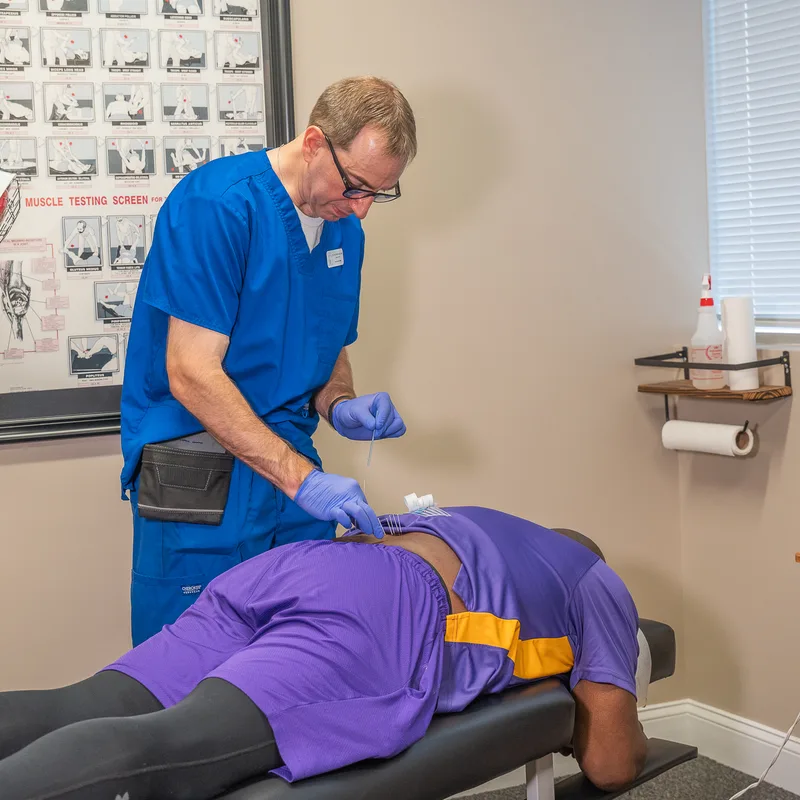
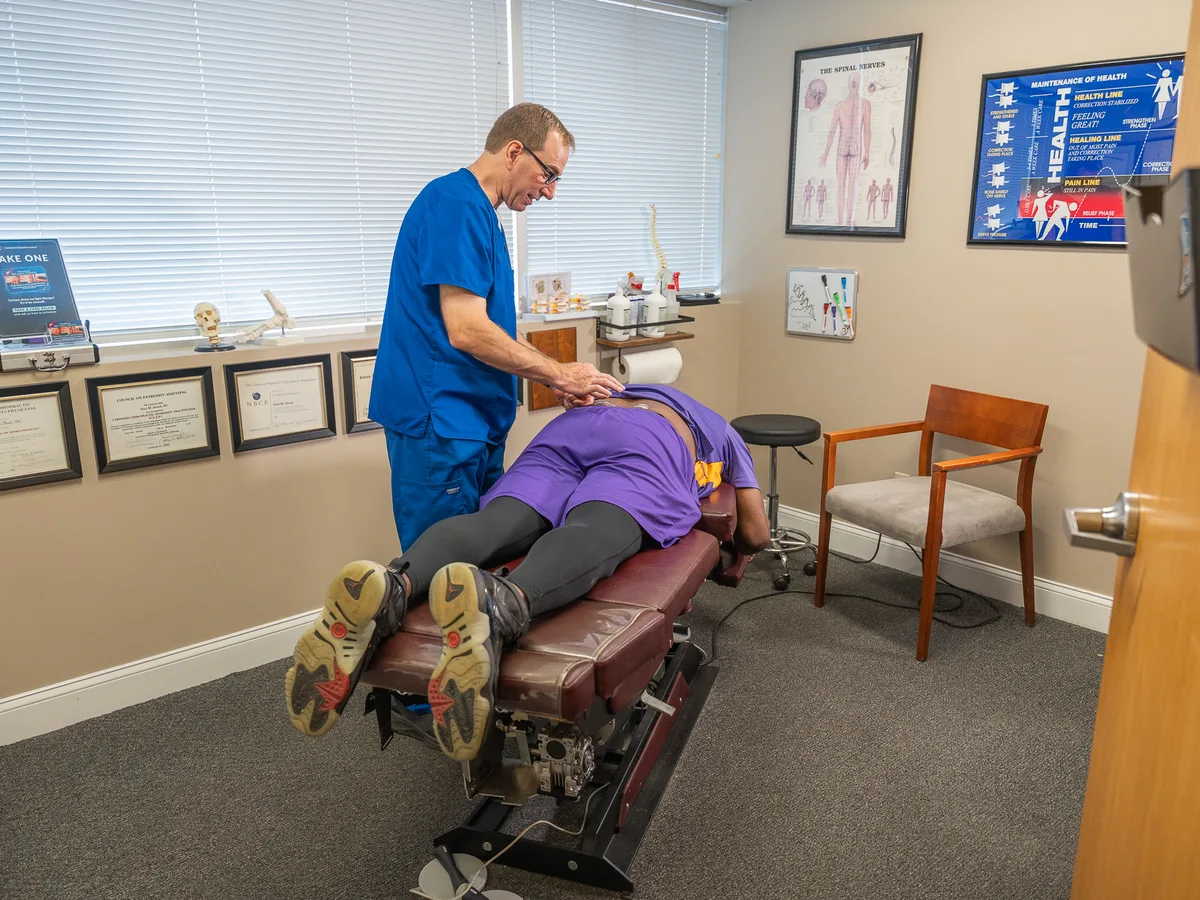
Flexion-distraction gently unloads the disc while adjustments restore joint motion and corrective exercise rebuilds the support that prevents recurrence.
The basics
Understanding disc injury
Your spine is stacked with 23 rubbery discs that sit between the vertebrae, absorbing shock and allowing movement. Each disc has a tough outer ring (annulus fibrosus) and a soft, gel-like center (nucleus pulposus). When the outer ring weakens or cracks — from a sudden injury, repetitive strain, or years of poor posture — the inner gel can bulge outward or push through entirely. That bulge or herniation can press against a nearby nerve root, triggering pain, numbness, or weakness that radiates well beyond the spine itself.
The good news is that most disc injuries respond very well to conservative, non-surgical care. Inflammation settles and nerve pressure decreases — especially when the right treatment removes the mechanical load from the disc early. We screen for the rare cases (progressive leg weakness, bowel or bladder changes) that require a surgical opinion and refer promptly, but the majority of disc patients we see never need to go that route.
In their words
“Prior to being treated by Dr. Abosh, I herniated my disc in my mid 30s that caused me so much stiffness and chronic pain. I was unable to bend from the waist and had to give up jogging as well as cycling, and weightlifting. I was told by my orthopedist that I would have to take…”
New Patients Welcome
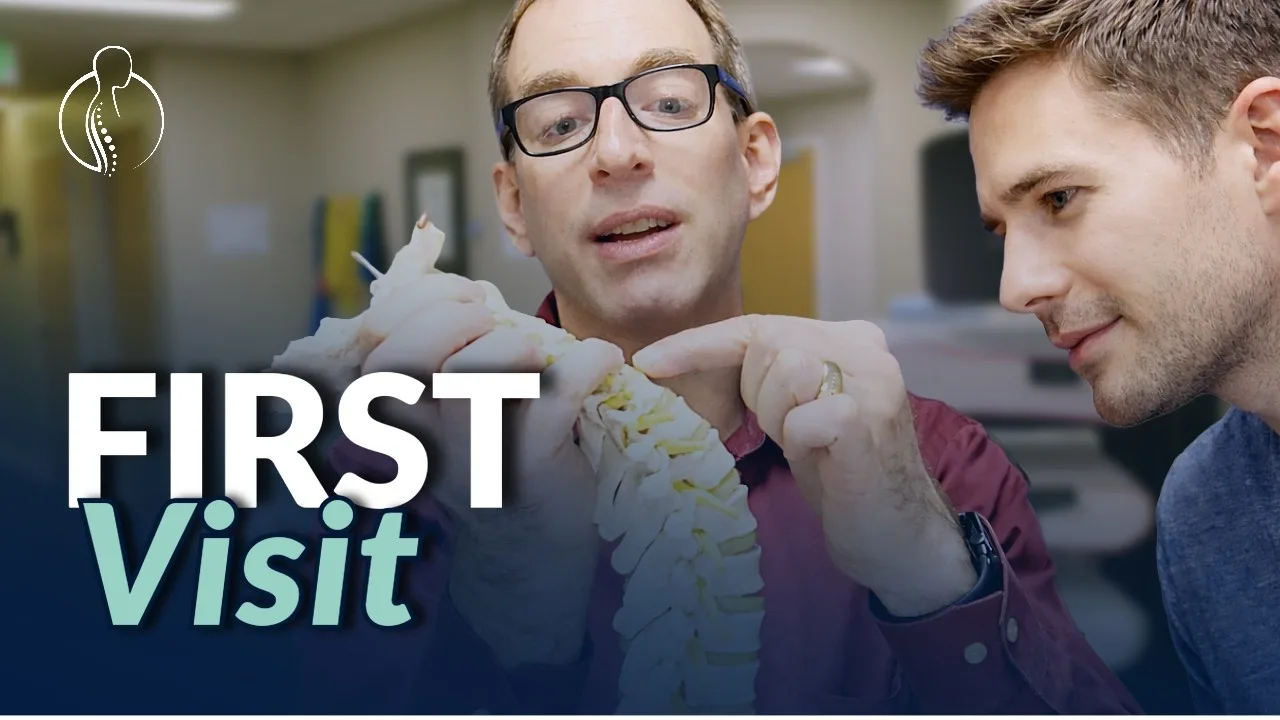
New patients welcome — book your first visit today
Your first visit is all about you — a one-on-one consultation, a thorough exam, and a clear, plain-language explanation of how we can help, plus a care plan built around your goals.
Types of disc injury we treat
Not all disc problems are the same. We regularly help Towson-area patients with:
- Herniated disc — the inner gel has broken through the outer ring and is pressing directly on a nerve root, often causing sharp radiating pain, numbness, or weakness. See our related page on pinched nerve for how nerve compression is addressed.
- Bulging disc — the outer ring is intact but bows outward under pressure. It may irritate nearby nerves and produce symptoms similar to a full herniation, sometimes progressing to one if the load is not reduced.
- Degenerative disc disease — gradual loss of disc height and hydration over time, leading to chronic back pain, stiffness, and increased risk of herniation or nerve impingement. Flexion-distraction helps restore fluid exchange and reduce nerve irritation even in degenerative cases.
When to see a chiropractor in Towson
Disc injuries rarely fix themselves when the underlying mechanical stress is still present. Consider booking an exam if you notice:
- Pain that shoots down your leg or arm, or wraps around the rib cage
- Numbness, tingling, or a “dead” feeling in a hand or foot
- Back or neck pain that lingers more than a week or keeps returning
- Symptoms that worsen with sitting, bending, sneezing, or coughing
- Pain following a car accident, fall, or heavy-lifting incident
Seek emergency care (ER, not a chiropractic office) if you develop sudden loss of bladder or bowel control, or rapidly worsening leg weakness — these are rare but serious signs that need immediate medical evaluation.
What to expect at your first visit
Your first appointment takes about 45–60 minutes. We spend most of that time understanding your problem before we treat it:
- Listen to your history — when and how the pain started, what makes it better or worse, and how it’s affecting your daily life and work.
- Examine thoroughly — orthopedic and neurological tests (straight-leg raise, dermatomal sensation, reflex and strength testing) to identify the disc level and degree of nerve involvement.
- Explain what we found (at your second visit, usually scheduled the very next day) — in plain English, including which disc is likely involved and whether conservative care is appropriate for you.
- Build your plan — a specific, time-bound care plan combining flexion-distraction, adjustments, and rehab — with a clear endpoint and realistic expectations.
Many patients begin their first decompression or gentle treatment the same day after the exam confirms they’re a good candidate.
Disc injury relief — without medication or surgery
Surgery and long-term pain medication may sometimes be a consideration — but they’re rarely the first answer for disc injuries. Chiropractic care, and specifically flexion-distraction, offers a better path: reduce the pressure on the disc and nerve, let the tissue settle and heal, and rebuild the support system that protects it.
Flexion-distraction works by gently distracting the vertebrae surrounding the injured disc. The resulting negative intradiscal pressure can help retract herniated material away from the nerve, improve nutrient and fluid exchange inside the disc, and reduce the inflammatory response. Most patients find it comfortable and even relaxing during the session.
We combine flexion-distraction with gentle chiropractic adjustments (to restore joint motion at neighboring levels), corrective exercise (to build the core and posterior chain support the disc relies on), and supportive therapies. This multi-modal approach addresses both the pain and the mechanics driving it.
If your exam or response to conservative care ever suggests you need imaging, specialist referral, or a surgical opinion, we’ll tell you honestly and help coordinate that next step.
Why Towson-area patients choose Towson Integrative Health
Patients from Towson, Lutherville, Timonium, Parkville, and Cockeysville choose us because we tell the truth about what your disc needs — and then deliver it. Dr. Paul Abosh combines evidence-based flexion-distraction, precise chiropractic adjustments, and corrective exercise into one clear, time-bound plan designed to resolve your disc injury and keep it from returning.
Ready to find out if conservative disc care is right for you? See what to expect on your first visit, then book an appointment online in under a minute.
Treatment options
Services we use to relieve disc injury
Chiropractic Care
Gentle, precise chiropractic adjustments in Towson, MD that restore motion to restricted joints and relieve back, neck, and joint pain at the source.
Learn more →Physical Therapy
Personalized corrective exercise and rehab in Towson strengthen weak joints, correct posture, and keep back pain, neck pain, and other joint pain from coming back.
Learn more →Flexion-Distraction
Gentle flexion-distraction therapy in Towson, MD — a hands-on, non-invasive technique that decompresses the lower spine to relieve low back, disc and sciatic pain.
Learn more →Related conditions
Other conditions we treat in Towson
Patient reviews
What our Towson patients say
“Great experience so far has been a month and I am doing better.”
“So knowledgeable , accommodating and super friendly! I highly recommend this office. They have cured me of my feet issues and I will return here for any of my body issues!”
“I have made 100% recovery from my chiropractic sessions. I am back to working out and teaching my exercise classes.”
Disc Injury FAQ
Can a herniated disc heal without surgery?
Often, yes. Conservative care like flexion-distraction can relieve pressure on the disc and nerve, giving the tissue a chance to heal and the disc material to retract. We refer for a surgical opinion whenever red flags — progressive weakness, or bowel or bladder changes — are present.
What is the difference between a herniated disc and a bulging disc?
A bulging disc protrudes outward but the outer ring is still intact. A herniated (ruptured) disc means the outer ring has cracked and the inner gel has pushed through. Both can compress nearby nerves and cause similar symptoms; both often respond to conservative care.
How does flexion-distraction help a disc injury?
Non-surgical flexion-distraction gently distracts the vertebrae, creating negative pressure inside the disc. That pressure change can help retract the bulging material, reduce nerve compression, and improve fluid exchange so the disc heals more effectively.
How do I know if my back pain is disc-related?
Disc pain often radiates into a limb, worsens with sitting or bending, and may come with numbness or tingling. A thorough orthopedic and neurological exam — and sometimes imaging — is the reliable way to know. Book an exam and we'll give you a clear answer.
How many visits will I need?
It depends on which disc is involved, how long you've had symptoms, and how your body responds. After your exam, Dr. Abosh gives you a specific, time-bound plan with a realistic endpoint — not open-ended visits.
Do I need an MRI before coming in?
Not necessarily. Most disc injuries can be assessed clinically on the first visit. We order or refer for imaging only when the result would change your care plan — and we explain exactly when and why.
Is chiropractic adjustment safe when I have a disc injury?
Yes, when the technique is appropriate for the condition. We modify our approach for disc patients — using gentler, low-force methods and often combining them with decompression — and we screen for contraindications before any treatment begins.
What red flags should send me to the ER instead of a chiropractor?
If you experience sudden loss of bladder or bowel control, rapidly progressive leg weakness, or severe pain following major trauma, go to an emergency room immediately. These signs suggest a more serious injury that needs urgent medical evaluation.
Can disc injuries come back after they heal?
They can if the underlying mechanics — weak core, poor posture, movement habits — are not corrected. That's why our plans include corrective exercise — to rebuild the support system that protects the disc long-term.
Do you treat cervical (neck) disc injuries as well?
Yes. Cervical disc injuries cause arm pain, hand numbness, and neck stiffness and are treated with the same combination of soft tissue treatment, gentle adjustments, and rehab we use for lumbar discs.
Will my insurance cover disc treatment?
We accept many major plans and offer affordable self-pay options. Send us your insurance details and we'll verify your benefits before your first visit so there are no surprises.
Still have questions? Contact us — we're happy to help.