Myofascial release in Towson, MD — slow, sustained pressure that frees the connective tissue to ease chronic tightness, restore movement, and relieve stubborn pain.
Chronic tightness, nagging pain, and that feeling of being "locked up" often trace back not only to the muscle itself but also to the fascia — the thin, fibrous web of connective tissue that surrounds every muscle, bone, and organ in your body. Myofascial release uses slow, sustained hands-on pressure to find and free those restrictions, restoring the glide and suppleness that lets you move without pain. Dr. Paul Abosh uses this technique as a core part of care for patients across Towson, Lutherville, Timonium, and Cockeysville who haven't found lasting relief from conventional bodywork or stretching alone.
How it works
What to expect with myofascial release
Find the restriction
We assess posture, movement patterns, and hands-on tissue quality to locate the fascial restrictions that are pulling on your pain — not just the area where it hurts.
Slow, sustained release
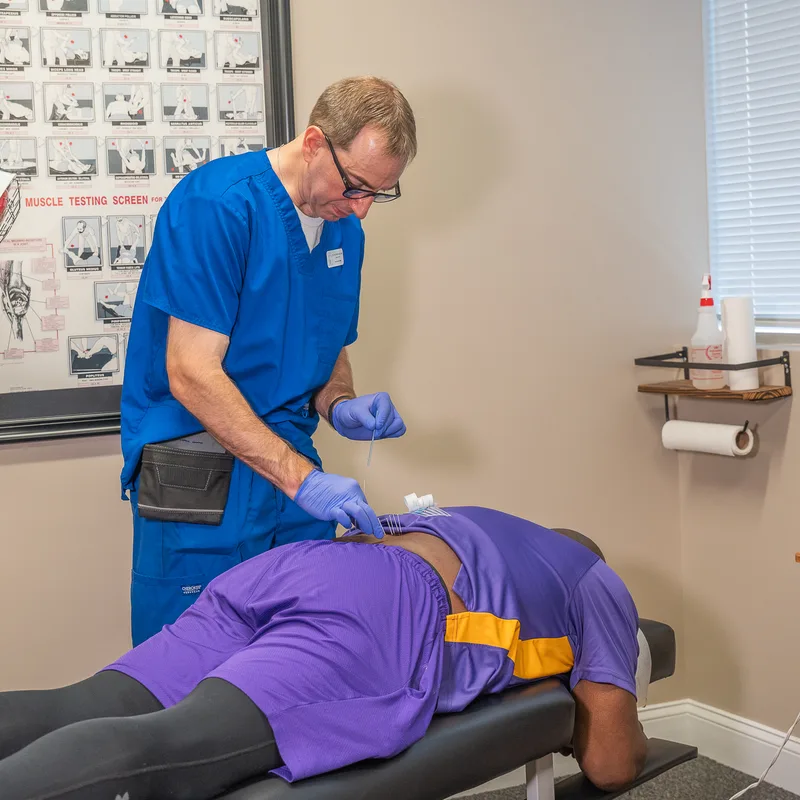
Using direct skin contact, we apply gentle, sustained pressure into each restriction and hold until the tissue softens — there's no forceful pushing or cracking.
Integrate and reinforce
Each session ends with movement cues that help the newly freed fascia stay supple between visits and support the rest of your care plan.
Why patients choose it
Benefits of myofascial release
Relieves chronic tightness that outlasts routine bodywork
Restores range of motion in the neck, shoulders, and back
Calms fibromyalgia-related widespread pain and sensitivity
Reduces scar-tissue adhesions from old injuries or surgery
Complements chiropractic adjustments by freeing the soft tissue around joints
Safe and natural — no downtime
The basics
About myofascial release
Fascia is one continuous, three-dimensional web — and when any part of it tightens or develops adhesions from injury, surgery, inflammation, or chronic stress, the restriction can pull on distant structures the way a snag in a sweater pulls the whole fabric. That's why a shoulder restriction might contribute to neck pain, or restricted fascia in the lower back can amplify hip tightness. Conventional bodywork relaxes muscle but rarely releases the deeper fascial layers where these adhesions live.
Myofascial release works differently. Instead of sliding over tissue with lotion, the therapist applies a sustained, gentle stretch into the barrier and waits until the fascia undergoes a mechanical and neurological release. Patients often describe a gradual "melting" or "unwinding" as the tissue lets go. Over a course of sessions the cumulative result is lasting — less tightness, fuller range of motion, and pain that stays gone rather than coming back a day after your last treatment.
New Patients Welcome
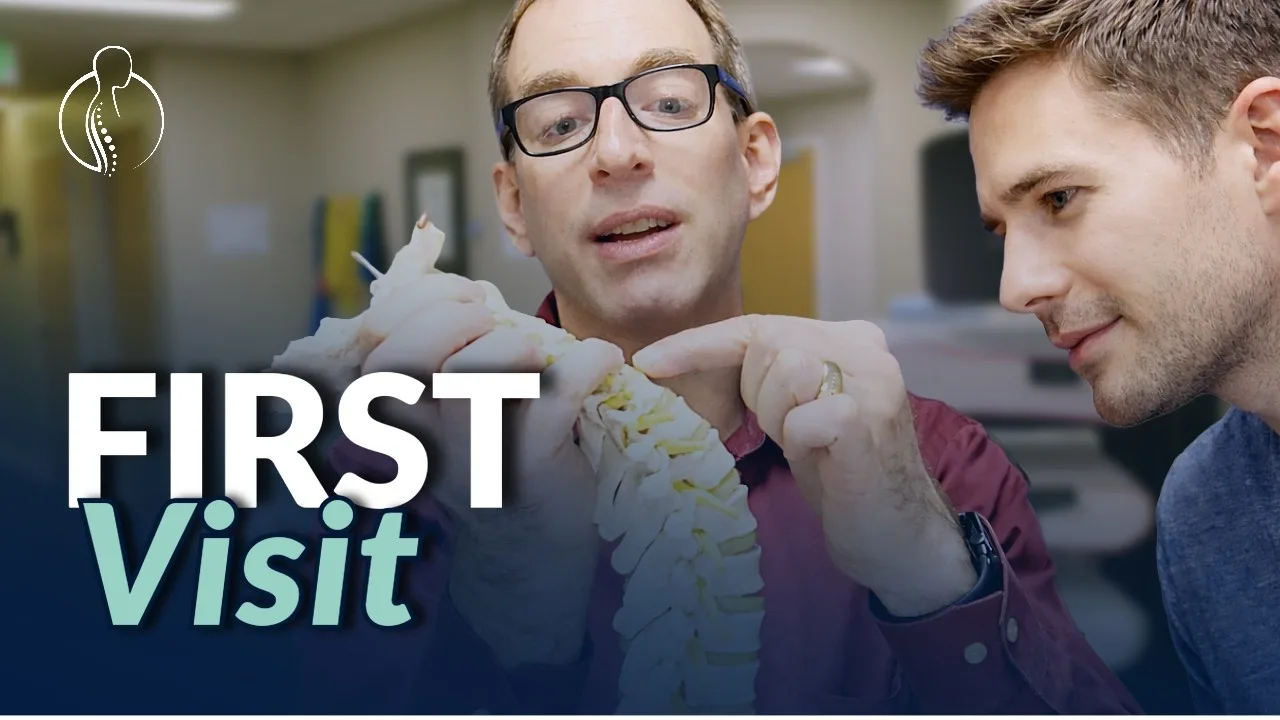
New patients welcome — book your first visit today
Your first visit is all about you — a one-on-one consultation, a thorough exam, and a clear, plain-language explanation of how we can help, plus a care plan built around your goals.
Our office is here to help you free chronic tightness that other bodywork hasn’t resolved. Myofascial release is a gentle, hands-on therapy that finds and releases restrictions in the fascia — the thin, continuous sheet of connective tissue that wraps around every muscle, joint, and organ in your body.
On your first visit, Dr. Abosh reviews your history and performs a postural and movement assessment, noting areas of reduced glide or tissue density that correlate with your symptoms. This assures he has a thorough understanding of exactly where your restrictions are before beginning treatment.
We’ll work with you to build a treatment plan that pairs myofascial release with chiropractic adjustments and other soft-tissue techniques as needed. We provide myofascial release in Towson, MD in a welcoming, family-friendly environment. We specialize in helping you:
Relieve chronic tightness that outlasts routine bodywork
Restore range of motion in the neck, shoulders, and back
Calm fibromyalgia-related widespread pain and sensitivity
Reduce scar-tissue adhesions from old injuries or surgery
Free the soft tissue around joints so adjustments hold longer
We want to find the fascial restriction behind your pain and free it at the source. If you’re dealing with chronic tightness or pain that hasn’t fully responded to other care, get in touch with us to book your appointment today.
What Does Myofascial Release Do?
Under normal conditions, fascia is fluid and supple, allowing structures to glide past one another freely. After an injury, surgery, repetitive strain, or prolonged stress, fascia can tighten and form adhesions — areas where the tissue has essentially stuck to itself or to neighboring structures. These restrictions don’t show up on standard imaging, but they create a constant pulling force that contributes to chronic pain, poor posture, and limited movement.
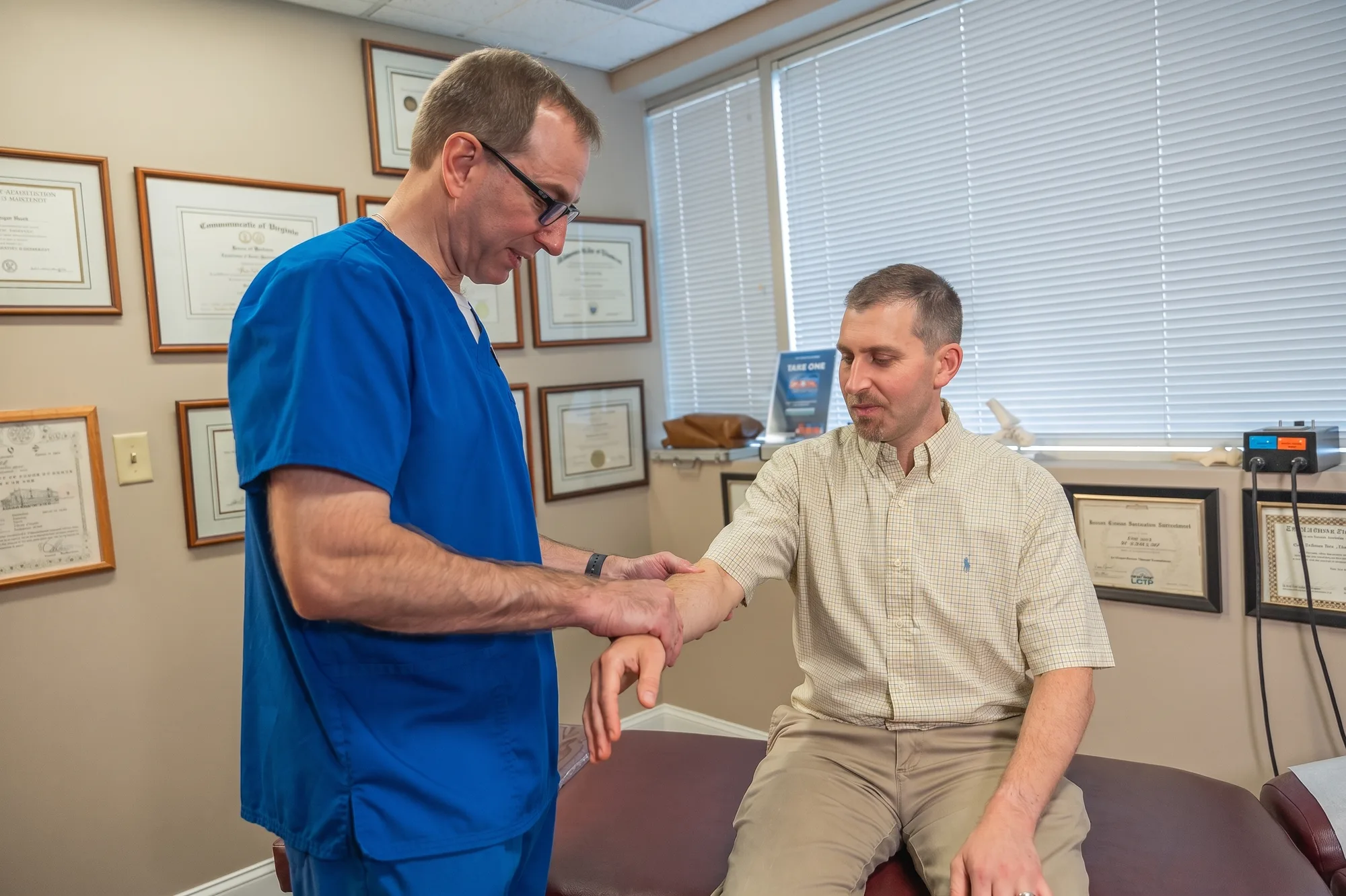
The provider places their hands directly on the skin and applies a slow, sustained stretch into the tight area. Rather than forcing the tissue, they wait for the fascia to respond and soften on its own, a process that usually takes 60–120 seconds per site — a genuine release of the restriction rather than a temporary relaxation of the overlying muscle.
Common Reasons to See Us for Myofascial Release
Myofascial release is a good fit for anyone dealing with pain or tightness that hasn’t fully responded to stretching, conventional bodywork, or medication. It is especially effective for:
Fibromyalgia — widespread sensitivity that responds poorly to deeper bodywork
Post-surgical or post-injury adhesions that limit recovery
Postural imbalances driven by fascial tightness rather than structural problems
Benefits of Myofascial Release
Myofascial release offers a gentle path to lasting relief:
Relieves chronic tightness that outlasts routine bodywork
Restores range of motion in the neck, shoulders, and back
Calms fibromyalgia-related widespread pain and sensitivity
Reduces scar-tissue adhesions from old injuries or surgery
Complements chiropractic adjustments by freeing the soft tissue around joints
Because fascia connects everything, a restriction in one area can refer symptoms to another — so if you’ve been chasing pain from site to site without lasting relief, fascial assessment is often the missing piece.
Get Myofascial Release in Towson, MD
At Towson Integrative Health in Towson, myofascial release is never a stand-alone menu item — it’s integrated into a complete care plan tailored to your body. Dr. Paul Abosh combines fascial work with chiropractic adjustments, targeted rehab, and other soft-tissue techniques so the relief you feel on the table translates into lasting improvement in your daily life. We serve patients from Towson, Lutherville, Timonium, Parkville, and Perry Hall, and we’re committed to honest, plain-English care that gives you a real endpoint rather than an indefinite schedule.
Myofascial release is a hands-on soft-tissue therapy that applies slow, sustained pressure to tight or restricted areas of the fascia — the connective tissue that surrounds your muscles. By holding a gentle stretch into each restriction, the therapist allows the tissue to soften and release, restoring movement and reducing pain.
▸Does myofascial release hurt?
It shouldn't feel sharp or intense. Most patients describe a deep pressure or mild stretching sensation that gradually softens as the fascia lets go. We always work within your comfort level and adjust pressure based on your feedback.
▸How is myofascial release different from regular bodywork?
Conventional bodywork uses lotion or oil to glide over muscle tissue and improve circulation. Myofascial release uses a sustained hold — sometimes 90 seconds or longer — into the fascial barrier rather than moving across it. This allows a deeper, more lasting release of adhesions.
▸Is myofascial release safe?
Yes. It is a gentle, non-invasive, natural therapy. We perform a thorough intake and exam before beginning care, and myofascial release is safe for most adults including those recovering from injury, surgery, or chronic conditions.
▸What conditions does myofascial release help?
It is especially helpful for chronic neck and back pain, shoulder tightness, fibromyalgia, headaches tied to fascial tension, post-surgical adhesions, and any recurring muscle tightness that keeps returning despite other treatment.
▸Will my insurance cover myofascial release?
Coverage varies by plan. We accept many major insurance plans and offer affordable self-pay rates. Send us your insurance information and we'll verify your benefits before your first appointment.
▸How should I prepare for a myofascial release session?
Wear or bring comfortable clothing you can move in. Arrive well-hydrated and let your therapist know about any recent injuries, surgeries, or tender areas. After a session, drink plenty of water and avoid intense exercise that day.
▸Can myofascial release be combined with chiropractic care?
Absolutely — it works especially well alongside adjustments. Freeing the fascial restrictions around a joint makes the joint easier to adjust and helps the correction hold longer. Dr. Abosh often integrates myofascial release as part of a broader care plan.
▸Is myofascial release suitable for fibromyalgia?
Yes. Research suggests myofascial release can meaningfully reduce the widespread pain and sensitivity of fibromyalgia. The gentle, non-compressive nature of the technique makes it a well-tolerated option for patients who find deeper bodywork too uncomfortable.
Still have questions? Contact us — we're happy to help.
“Great experience so far has been a month and I am doing better.”
KOKathryn OakjonesVerified review · Google”
“So knowledgeable , accommodating and super friendly! I highly recommend this office. They have cured me of my feet issues and I will return here for any of my body issues!”
SAS AllenVerified review · Google”
“I have made 100% recovery from my chiropractic sessions. I am back to working out and teaching my exercise classes.”