Brain Balance in Towson
How your brain and body communicate through the nervous system — and how gentle chiropractic care in Towson, MD supports comfort and posture.
Chiropractic & brain balance
Whole-person support for brain balance
Also known as: Brain-Body Connection, Nervous System Wellness, Mind-Body Connection
"Brain balance" describes the healthy, two-way communication between your brain and body through the nervous system. Your autonomic nervous system has two main branches — the sympathetic "fight-or-flight" response and the parasympathetic "rest-and-digest" state — that are meant to work together in balance. It's a wellness and education idea, not a medical diagnosis or treatment.
Signs and symptoms
- ✓Stress and tension you physically hold in your neck, shoulders, or jaw
- ✓Frequent tension headaches or tightness at the base of the skull
- ✓Neck and upper-back stiffness from screens and desk work
- ✓Muscle tightness or knots across the upper shoulders
- ✓Reduced, stiff range of motion when turning your head
Common contributing factors
- Chronic stress that keeps the body in a "fight-or-flight" state
- Forward-head posture and long hours at screens
- Restricted spinal joints and muscle tension that add to discomfort
- Poor or irregular sleep and inconsistent daily routines
- A sedentary lifestyle with little movement variety
- Lingering neck tension from a past car accident, fall, or whiplash
Our approach
How we support brain balance in Towson
Thorough exam
We review your health history and perform an orthopedic, postural, and movement assessment of your spine and neck — looking at the mechanical factors that may be adding to tension, stiffness, or discomfort. We screen carefully and refer out for anything outside our scope.

A clear, personalized plan
You will receive a plain-English explanation of what we found and a specific, time-bound plan built around your posture, movement, and lifestyle — not a generic protocol, and never an open-ended commitment.
Gentle care & practical habits
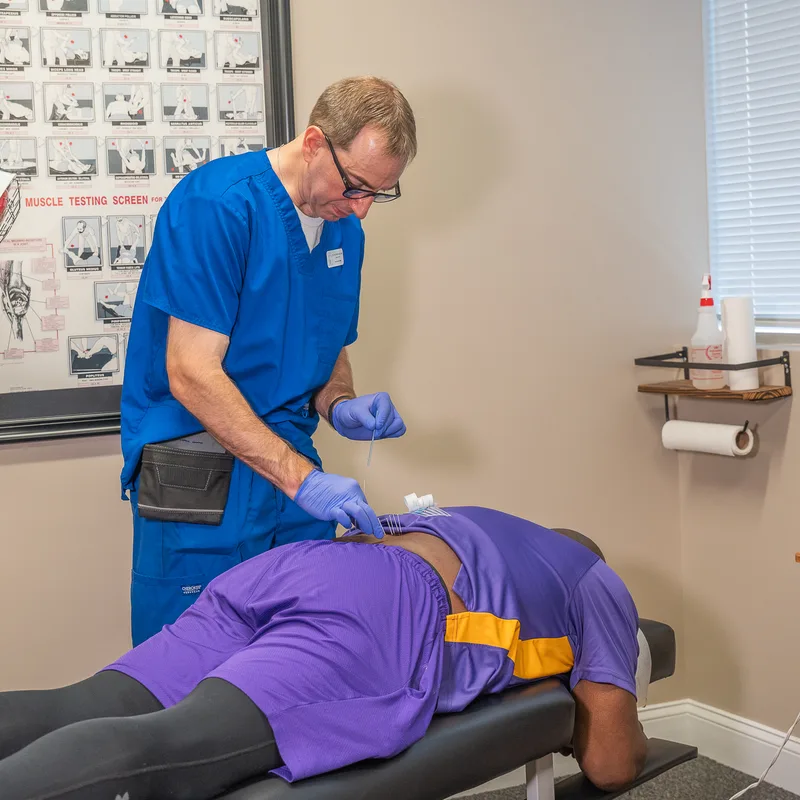
We combine gentle chiropractic adjustments and [corrective exercises](/services/physiotherapy/) to ease joint restriction and muscle tension, alongside everyday guidance on sleep, movement, and stress management that supports how you feel.
The basics
Understanding brain balance
"Feeling out of balance" is something people describe in everyday terms — tense, tired, wired, or foggy after a long stretch of stress, poor sleep, and hours at a screen. There's no single switch that fixes it, and no hands-on technique can "reset" or "rebalance" your nervous system — we won't claim that. What chiropractic care can honestly do is address the physical, mechanical side of how you feel: restricted, achy joints and the muscle tension a stiff, screen-bound neck carries.
Think of it as one supportive piece of a bigger picture. Alongside the well-established habits that genuinely support your nervous system — consistent sleep, regular movement, and stress management — easing that mechanical tension can help you feel more comfortable and move more freely. The deeper physiology of how your brain and body actually communicate is explained below.
In their words
“I love it here! Ashley and Dr. Abosh are very caring and he worked my pain away and I don’t have brain fog anymore for a holistic bonus!”
New Patients Welcome
New patients welcome — book your first visit today
Your first visit is all about you — a one-on-one consultation, a thorough exam, and a clear, plain-language explanation of how we can help, plus a care plan built around your goals.

Towson Integrative Health is an independent chiropractic practice and is not affiliated with Brain Balance Achievement Centers or any franchised cognitive program. On this page, “brain balance” simply means supporting healthy communication between your brain and body — through posture, movement, stress management, and gentle chiropractic care.
What is the brain–body connection?
The brain–body connection is the constant, two-way flow of nerve signals between your brain and the rest of your body. The brain and spinal cord — together called the central nervous system — send and receive those signals through a vast web of nerves that reach every muscle, joint, and organ (Cleveland Clinic). It’s the real physiology behind the popular idea of a “brain-body connection.”
A large share of this network runs on autopilot. The autonomic nervous system (ANS) — “autonomic” means self-governing — quietly manages your heart rate, breathing, blood pressure, digestion, and body temperature so you don’t have to (Cleveland Clinic).
Fight-or-flight vs. rest-and-digest
The autonomic nervous system has two main branches that are meant to balance each other:
- The sympathetic branch drives the “fight-or-flight” response — speeding up your heart, sharpening alertness, and priming your muscles when your brain senses a demand or a threat.
- The parasympathetic branch drives the “rest-and-digest” state — slowing things back down, supporting digestion and recovery when you feel safe.
Cleveland Clinic describes a flexible equilibrium between these two branches as key to feeling well. Modern life — deadlines, screens, poor sleep, little movement — can nudge many people toward spending more time in “fight-or-flight” than their body would choose.
The vagus nerve and heart rate variability
The vagus nerve (cranial nerve X) is the workhorse of the parasympathetic system — the left and right vagus nerves together carry roughly 75% of the parasympathetic system’s nerve fibers and relay signals among the brain, heart, and digestive tract (Cleveland Clinic).
One measurable window into this balance is heart rate variability (HRV) — the small, natural variation in time between heartbeats, set by your autonomic nervous system. In general, a higher HRV reflects greater adaptability, but HRV is highly individual, so it’s best tracked against your own baseline rather than compared to anyone else’s (Cleveland Clinic; Harvard Health).
A note on honesty: you’ll see clinics claim that an adjustment “stimulates the vagus nerve” or “raises your HRV.” Current research doesn’t support that — a 2024 systematic review found spinal manipulation did not significantly change autonomic measures compared with a sham (systematic review, 2024). We won’t make that claim. We’ll help with the parts of your body that chiropractic care genuinely addresses, and point you to the habits below that are well supported.
Stress, sleep, and your nervous system
The stress response begins in the brain, which signals the release of adrenaline and then cortisol — raising heart rate, blood pressure, and breathing to help you meet a challenge. That system is healthy in short bursts, but when it fires over and over, chronic stress is linked to higher blood pressure and changes in the arteries, which is one reason rest-and-recovery habits matter (Harvard Health).
Sleep works hand-in-hand with this system: healthy sleep shifts you toward calming parasympathetic activity, while poor or insufficient sleep is associated with more sympathetic activation and lower HRV (NIH/NCBI).
Separately, your neck and spine are especially rich in position sensors (proprioception) that constantly tell your brain where your body is in space — basic anatomy that helps explain why gentle movement and good posture simply feel good.
Everyday habits that support nervous-system balance
These are general wellness habits — supported by the sources above — that anyone can use, with or without chiropractic care:
- Protect your sleep. A consistent schedule and a wind-down routine help your nervous system downshift at night.
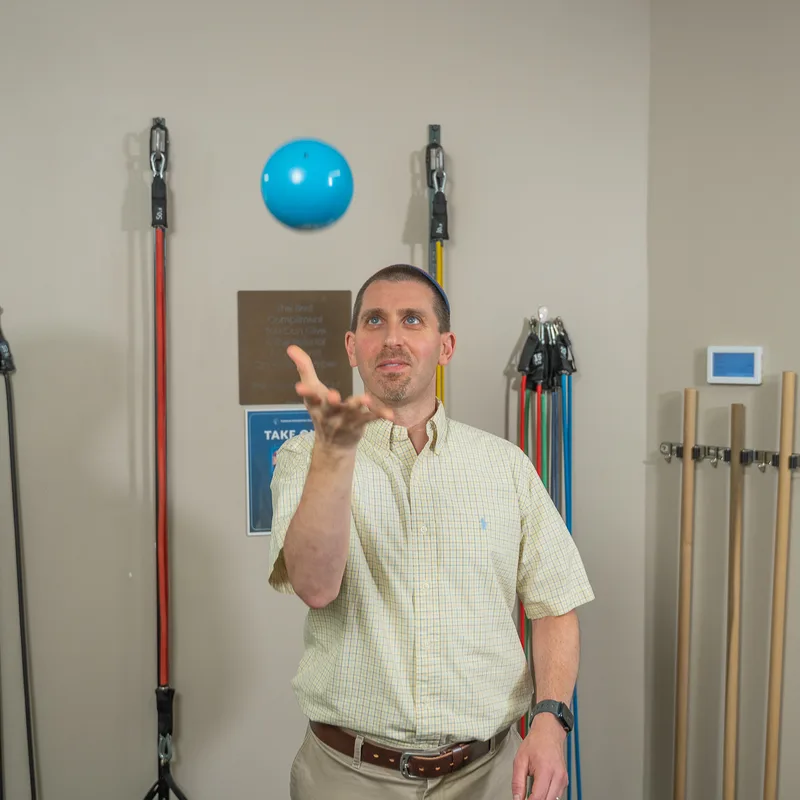
- Move often, and vary it. Walking, mobility work, and corrective exercise counter long hours of sitting.
- Practice slow breathing. Longer, slower exhales are a simple, well-tolerated way to lean into “rest-and-digest.”
- Mind your posture. Setting up your screen at eye level eases the forward-head strain that builds neck tension and headaches.
- Build in real recovery. Short breaks, time outdoors, and unplugging help offset a day spent in “go” mode.
How chiropractic care fits in
Here’s the honest version. Chiropractic care is focused on your spine, joints, muscles, and movement. Research summarized by the NIH’s NCCIH shows spinal manipulation can offer modest relief for low-back pain, neck pain, and certain headaches — with benefits described as small-to-moderate and the evidence quality low-to-moderate. NCCIH also notes it has not shown clear benefit for non-musculoskeletal conditions.
So chiropractic isn’t a treatment for your nervous system, and it won’t cure brain fog, fatigue, mood, digestion, or sleep. What it can do is address the mechanical load you carry — restricted, achy joints and tight muscles, especially in a neck stiffened by screens and stress — as one supportive piece of the whole-person routine above. Easing that mechanical tension is a real but modest benefit — one supportive piece of the whole-person routine above, not a remedy for the brain fog, fatigue, mood, or sleep concerns described earlier.
When to see a chiropractor in Towson
You don’t need to wait for pain to consider a chiropractic exam. It may be worth booking if you notice:
- Persistent neck and upper-back tension or stiffness from desk work and screens
- Frequent tension headaches or tightness at the base of the skull
- Stress you physically hold in your neck, jaw, or shoulders
- Lingering neck tension from a past car accident, fall, or whiplash
- A desire to move better and build supportive habits — not just react to pain
Call 911 immediately for sudden severe headache, confusion, slurred speech, vision changes, or numbness or weakness on one side of the body — these can be signs of a stroke or other serious neurological event, which chiropractic care does not address.
What to expect at your first visit
- Listen to your story — how you’ve been feeling, and what your stress, sleep, and posture look like day to day.
- Examine thoroughly — an orthopedic, postural, and movement assessment of the spine and neck, with careful screening.
- Explain what we found (at the second visit, usually the very next day) — in plain English, with a specific plan and realistic expectations about what chiropractic care can and can’t do.
- Begin care when appropriate — many patients receive their first gentle adjustment on that second visit.
Nervous-system-friendly care in Towson, MD
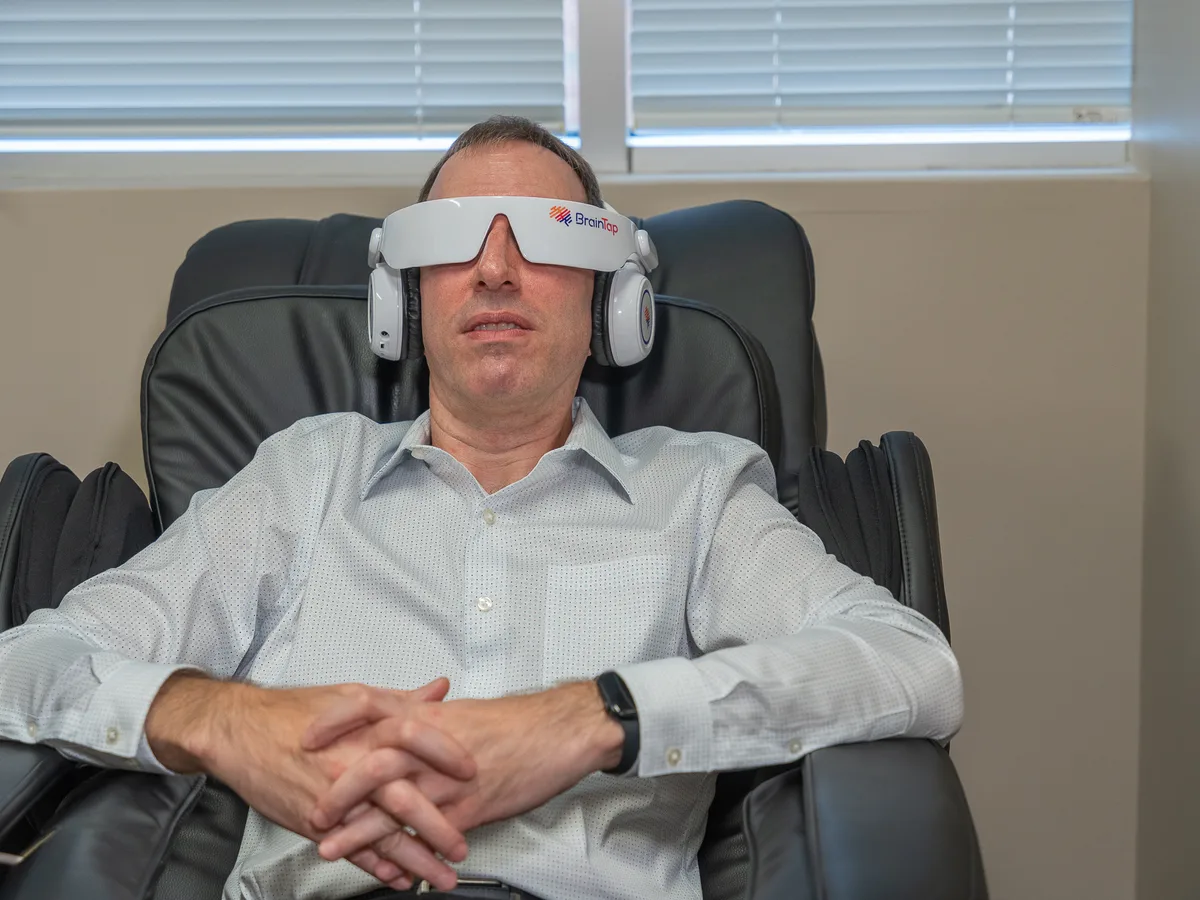
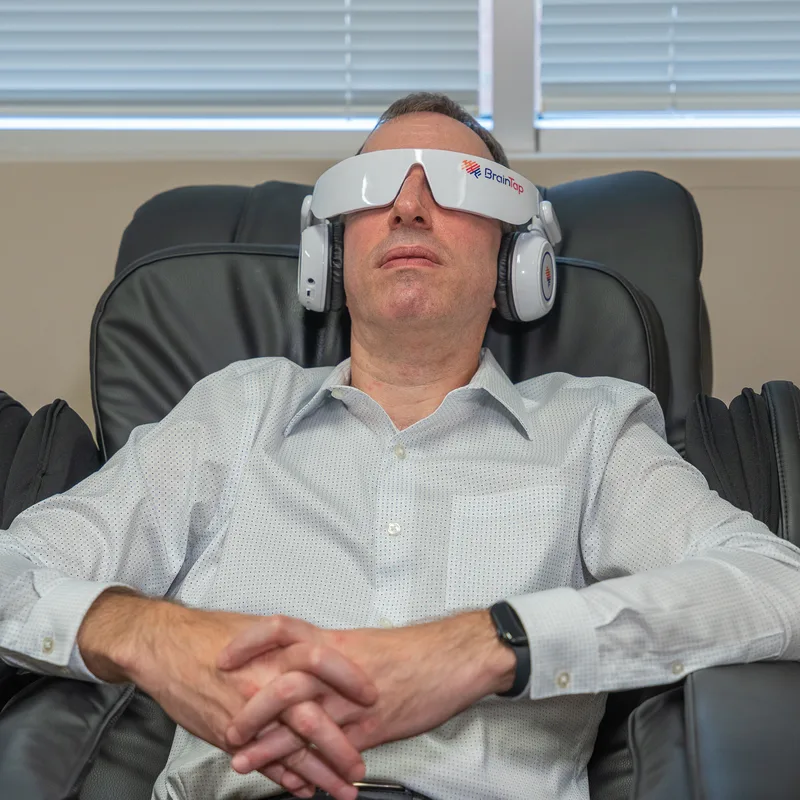
Patients across Towson and Baltimore County choose Dr. Paul Abosh and our team because we look at the whole picture and stay honest about scope. Every plan starts with a thorough exam and a plain-English explanation of what we find — then we partner with you on a plan built around your posture, movement, and lifestyle. We combine chiropractic care, corrective exercise, and wellness options like BrainTap sessions as part of a broader wellness care approach.
New here? See what to expect on your first visit, or book an appointment online in under a minute.
Reviewed by Dr. Paul Abosh, DC — Last reviewed July 2026. This page is for general education only. It is not medical advice and is not intended to diagnose, treat, cure, or prevent any disease. Always consult your physician about your health.
How we help
How chiropractic care supports brain balance
Chiropractic Care
Gentle, precise chiropractic adjustments in Towson, MD that restore motion to restricted joints and relieve back, neck, and joint pain at the source.
Learn more →Physical Therapy
Personalized corrective exercise and rehab in Towson strengthen weak joints, correct posture, and keep back pain, neck pain, and other joint pain from coming back.
Learn more →Wellness Care
Ongoing wellness chiropractic in Towson, MD — catch small issues before they flare, stay aligned, and keep moving at your best with a personalized maintenance plan.
Learn more →BrainTap Therapy
Guided light-and-sound relaxation sessions in Towson, MD — help unwind everyday stress, support better sleep, and sharpen daily focus with BrainTap.
Learn more →Related conditions
Other conditions we treat in Towson
Patient reviews
What our Towson patients say
“Great experience so far has been a month and I am doing better.”
“So knowledgeable , accommodating and super friendly! I highly recommend this office. They have cured me of my feet issues and I will return here for any of my body issues!”
“I have made 100% recovery from my chiropractic sessions. I am back to working out and teaching my exercise classes.”
Brain Balance FAQ
What does "brain balance" mean in chiropractic care?
Brain balance is a plain-language way to describe healthy communication between your brain and body through the nervous system. At our office it's a wellness and education idea — we support comfort, posture, and movement, and we don't claim to diagnose or treat the nervous system itself.
Is this the same as Brain Balance Achievement Centers?
No. Towson Integrative Health is an independent chiropractic wellness practice and is not affiliated with Brain Balance Achievement Centers or any franchised cognitive program. Here, "brain balance" simply means supporting healthy brain-body communication — not a neurodevelopmental program for children.
What is the difference between fight-or-flight and rest-and-digest?
Fight-or-flight and rest-and-digest are the two main branches of your autonomic nervous system. The sympathetic branch drives "fight-or-flight," raising heart rate and alertness under stress. The parasympathetic branch drives "rest-and-digest," calming the body when you feel safe. Health depends on a flexible balance between them.
What is the vagus nerve, and can a chiropractor "activate" it?
The vagus nerve is the main nerve of the parasympathetic system, relaying signals among the brain, heart, and gut. We don't claim adjustments stimulate or "reset" it — current research doesn't support that. We focus on the spine, joints, and muscles.
Can chiropractic care help with the nervous system?
Chiropractic care focuses on the spine, joints, muscles, and movement. Research recognized by the NIH's NCCIH shows spinal manipulation can offer modest relief for low-back pain, neck pain, and certain headaches. It supports comfort and posture — it doesn't treat disease or "rebalance" your nervous system.
Can chiropractic care help after a concussion or whiplash?
We can evaluate and help with the neck-related, musculoskeletal part of recovery — such as whiplash, neck pain, or tension — and coordinate with your medical team. We do not diagnose or treat brain injury itself. Any suspected head injury needs prompt medical evaluation first.
Is a chiropractic adjustment safe?
When performed by a licensed chiropractor, gentle spinal manipulation is generally considered safe; the most common side effects are temporary soreness that eases within a day.
How many visits will I need?
It depends on your posture, stress load, activity level, and overall health. After your first visit, Dr. Abosh gives you a specific, realistic plan with a clear endpoint — not an open-ended commitment. You'll always know what we recommend and why.
Do I need a referral before I come in?
No referral is required in Maryland. You can book directly for an in-office exam. If your particular insurance plan requires a referral, our front-desk team will help you sort that out before your first visit.
When is this a medical emergency?
Sudden severe headache, confusion, slurred speech, vision changes, or numbness or weakness on one side of the body can signal a stroke or other serious event — call 911 immediately. Chiropractic care is for everyday stiffness, tension, and posture, not emergencies.
Still have questions? Contact us — we're happy to help.